Reception venue inquiry tracking
In a reception venue, the sales cycle can last from 2 weeks to 18 months depending on the event type. Without structured step-by-step tracking, inquiries go cold, follow-ups are forgotten, and high-value opportunities quietly slip away. Sales tracking tailored to the pace of events changes everything.
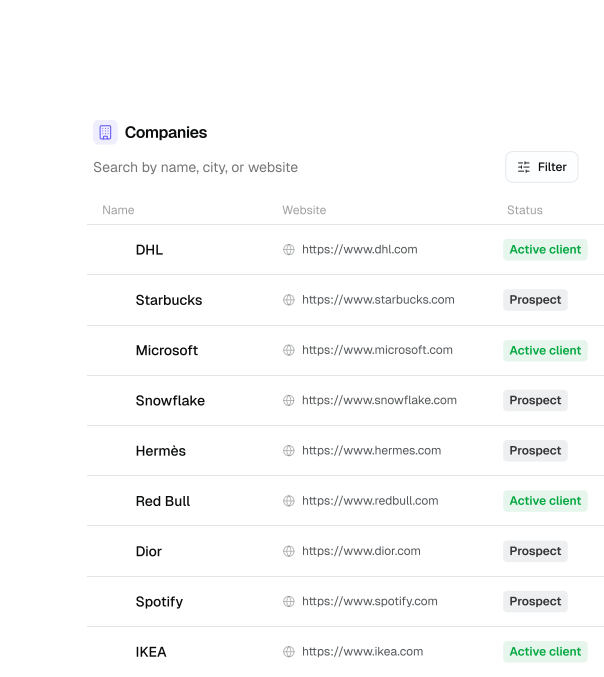
Expert: opportunity progression and forecasting
Effective tracking relies on stage-based progression criteria, stalled opportunity management, and reliable revenue forecasting.
Design stage-based progression criteria: clearly define what moves a request from one stage to the next (visit confirmed, quote sent, etc.).
Manage stalled opportunities: alert rules, targeted follow-ups, and closure decisions to avoid clogged sales tracking.
Improve forecast accuracy: probability weighting, history by event type, and variance tracking.
Metrics to track
- Booking rate between each stage of the sales tracking.
- Average opportunity lifespan before closure or booking.
- Gap between forecast and actual revenue (forecast accuracy).
What makes the difference
Venues that manage their sales tracking well don't just track: they define explicit progression criteria, regularly clean up stalled opportunities, and adjust their forecasts using historical data.
Your inquiries get lost along the way
Without structured tracking, inquiries go cold, follow-ups are forgotten, and opportunities slip away. Teams are overwhelmed with requests without knowing where each deal stands, response times stretch, and clients turn to competitors. Management has no reliable visibility to forecast upcoming revenue.
- No visibility on the progress of each inquiry
- Manual follow-ups often forgotten or delayed
- No data on reasons for lost deals
- Unable to forecast upcoming revenue
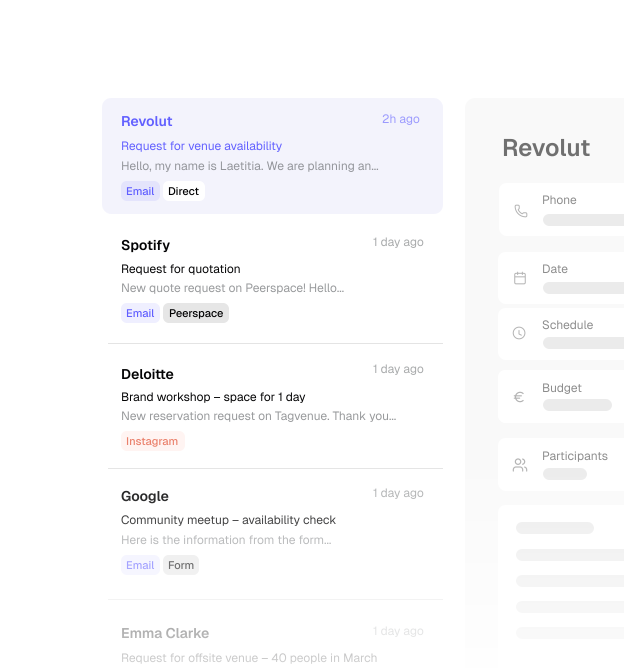
Clear sales tracking for each inquiry
Visualize the progress of each inquiry, prepare follow-ups, and analyze your bookings.
- Visual sales tracking with customizable stages
- Scheduled reminders and follow-ups
- Complete history of every interaction
- Booking management and revenue forecasting
Tracking that books
Stop letting opportunities slip through the cracks.
Opportunities saved
Step-by-step tracking with scheduled reminders noticeably reduces opportunities that fall through the cracks. Every inquiry is followed through to conclusion, won or lost.
Bookings confirmed
Structured sales tracking and well-timed follow-ups multiply the booking rate. Teams know when to act and no longer let ready-to-book inquiries slip away.
Forecast accuracy
An up-to-date sales tracking and stage-based probabilities enable revenue forecasting with reduced margin of error. Management confidently steers resources and investments.
Tracking scenarios
How to track your inquiries based on their profile.
Celebrations and private events
Weddings and anniversaries are planned 6 to 18 months in advance. Adapted tracking schedules reminders at key stages: site visit, proposal, menu approval. Without it, the inquiry disappears into limbo and resurfaces with a competitor.
Corporate events
Seminars and conferences involve multiple decision-makers: HR manager, management, procurement. Each approval takes time. Tracking by contact and stage prevents deals from stalling without the team knowing why.
Recurring requests
Some clients organize several events per year. Account-based tracking identifies these high-potential profiles, prioritizes follow-ups, and nurtures a clientele that generates recurring revenue.
From 12% to 28% booking rate
Before
A reception venue with 3 spaces received about 450 requests per year and booked 12%. The 2-person sales team was overwhelmed with requests and had no visibility on deal progress. Follow-ups depended on each person's memory, long-term requests fell through the cracks, and the manager never knew how many bookings would come in the next quarter.
Change
Implementation of 6-stage sales tracking with scheduled reminders at each stage. Each inquiry is assigned to a manager, comments are centralized, and stalled opportunities are flagged in weekly meetings. Requests more than 6 months out are tracked in a dedicated stage with spaced follow-ups.
After
Booking rate rose to 28% in 8 months. The team knows exactly which deals to prioritize, high-potential inquiries are no longer lost, and revenue forecasting is reliable within 10%. The manager confidently steers resources and investments.
Sales Manager
Reception venue, New York metro area (3 spaces, 200 events/year)
Frequently asked questions
How do I structure my sales tracking?
How often should I follow up with a request?
How do I manage long-term requests?
What data should I analyze to improve bookings?
How do I get the whole team involved in tracking?
Related solutions
More solution pages
Related resources
How to Respond to Event Inquiries in Under 2 Hours
4-step method to respond to event venue inquiries in under 2 hours: templates, instant availability, quick quotes.
5 reasons your event quotes do not convert (and how to fix it)
Sending quotes but rarely getting signatures back? Discover the five mistakes that hurt your conversion rate and the practical fixes to turn more requests into confirmed events.
What does an event lead really cost? The calculation nobody makes
Web forms, trade shows, word of mouth, listing platforms… Every channel has a different acquisition cost. Knowing which one actually delivers changes your sales strategy.
Blog
Articles and tips
Track your inquiries methodically
Clear sales tracking to win more requests as bookings.